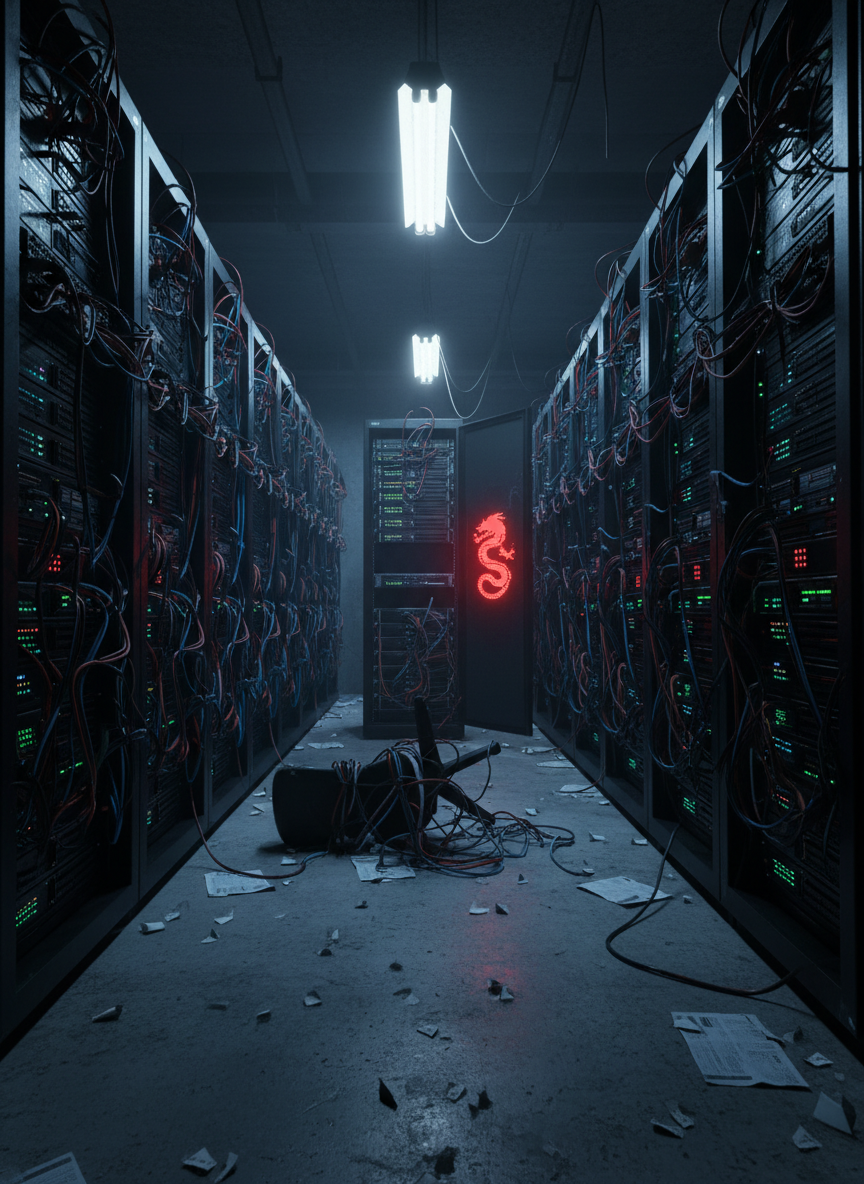
A dimly lit underground server room stretches into darkness, rows of towering black racks bristling with tangled cables and cold metal. At the center, one open rack reveals a single drive bay glowing an ominous dragon-red, its tiny status LEDs forming a subtle dragon-like silhouette. The concrete floor is littered with shredded documents and a toppled chair, hinting at a hasty departure. Overhead, failing fluorescent lights flicker intermittently, while the primary illumination is a stark, cinematic side light that rakes across the servers, carving out dramatic shadows. Shot from a low, tracking-style angle down the aisle, with a long depth of field emphasizing scale and isolation. The mood is threatening, paranoid, and technologically menacing.

Dragon File

A high-stakes spy thriller where family secrets are more lethal than classified intel.

About

Thrown Into The Shadows

After his parents are assassinated, college freshman Quentin Grant is pulled into a covert NSA–CIA operation, forced to decode a stolen file codenamed DRAGON before it ignites a global cyberwar and exposes the people he thought he could trust.
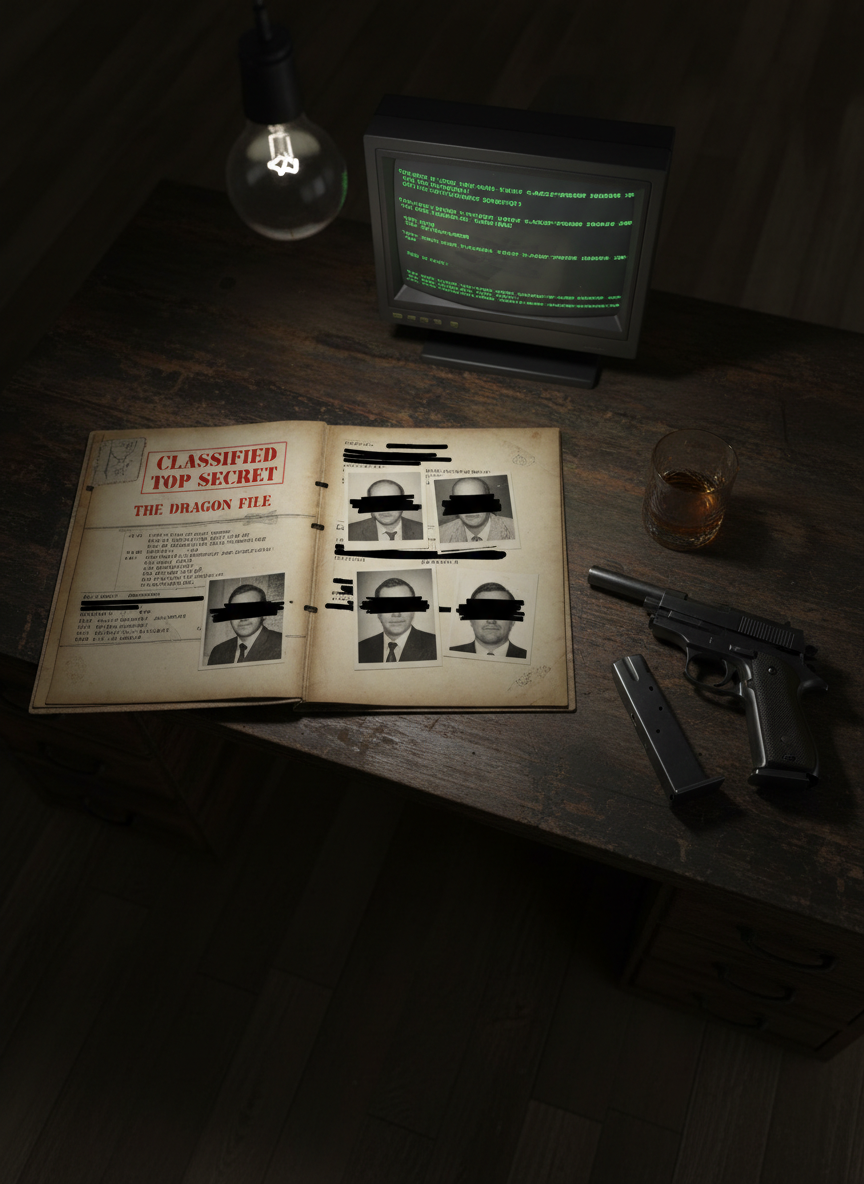
An open, classified dossier labeled “THE DRAGON FILE” rests on a scarred wooden desk, its cream pages filled with redacted paragraphs, cryptic codes, and overlapping surveillance photos with faces obscured by black bars. Beside it, a disassembled silenced pistol, a fingerprint-smeared whiskey tumbler, and a flickering old CRT monitor displaying a green-on-black terminal interface complete the scene. A single bare bulb overhead casts harsh, cinematic top lighting, creating deep pools of shadow that swallow the room’s edges. Shot from an overhead, slightly tilted angle for a sense of unease, with sharp focus on the dossier title. The mood is dark, conspiratorial, and claustrophobic, steeped in Cold War espionage aesthetics updated for a modern thriller.
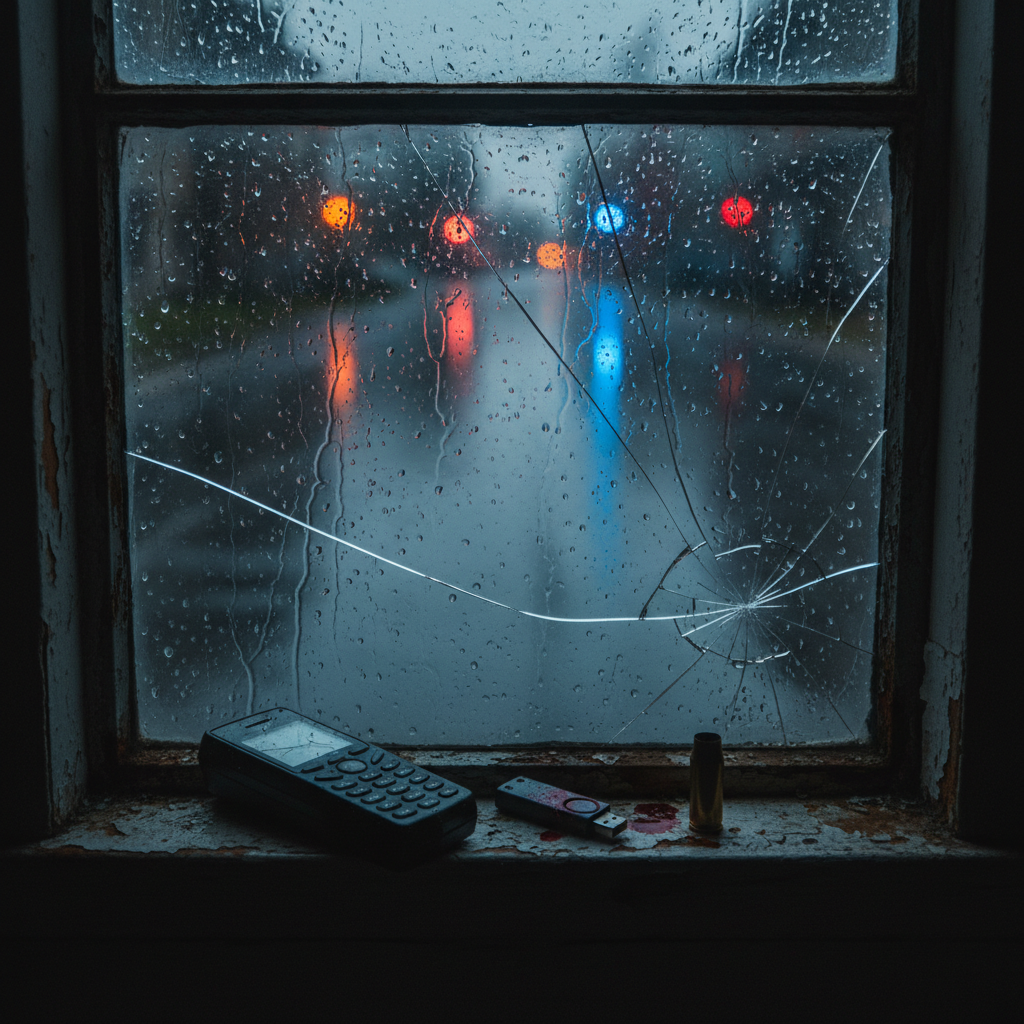
A rain-streaked safe house window dominates the frame, its cracked glass and rusted metal frame lit by the eerie blue wash of distant police lights and passing headlights. On the inner ledge lies an abandoned burner phone, a blood-specked encrypted USB drive, and a single spent shell casing, all rendered in hyper-detailed cinematic realism. Outside, the city is a smeared palette of wet asphalt and ghostly reflections. Dramatic, low-key lighting from a desk lamp behind the viewer creates a subtle rim glow on each object, leaving the rest of the room in blackness. Captured from a tight, eye-level composition, the image feels like the aftermath of violence, heavy with dread and unanswered questions.
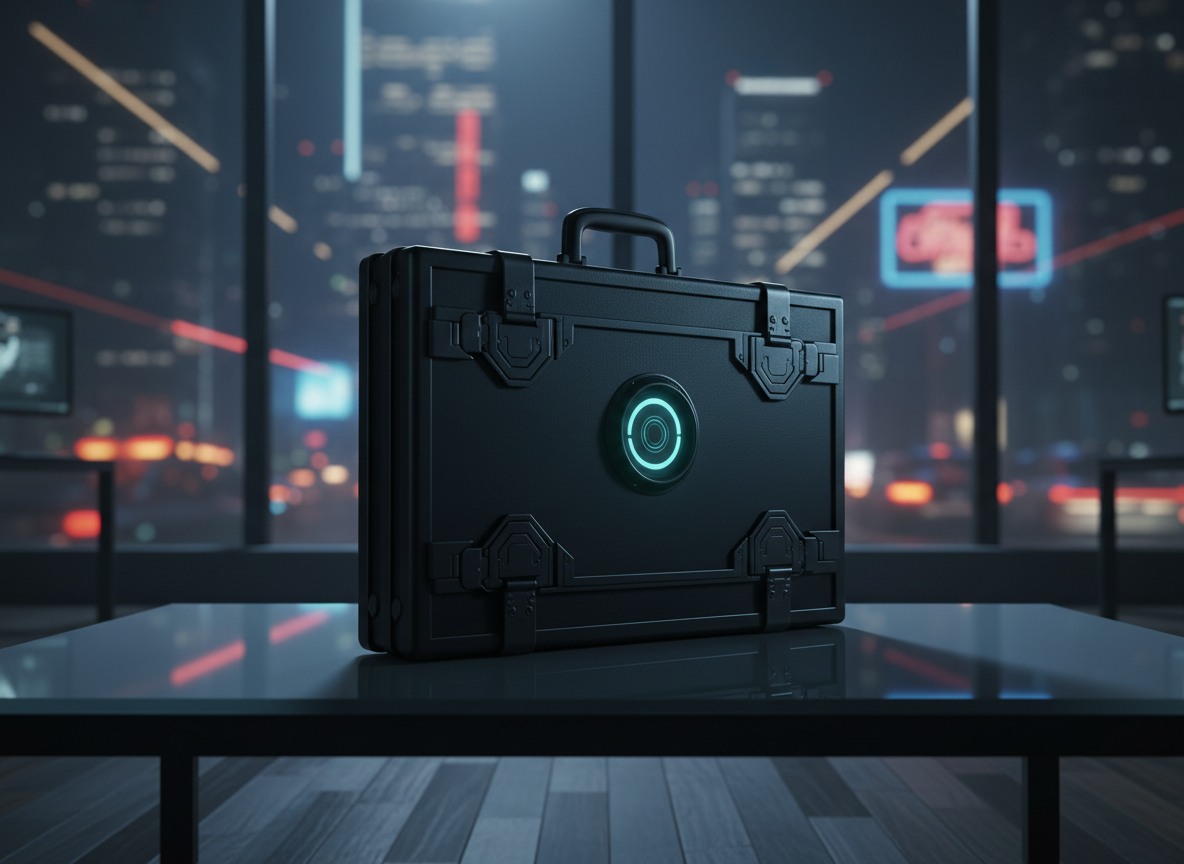
A slim, matte-black encrypted briefcase with intricate locking mechanisms and faintly glowing biometric scanner sits alone on a sleek, glass-topped table in a dark, high-rise office. Beyond the floor-to-ceiling windows, a sprawling city at night burns with blurred neon and distant sirens, rendered in soft bokeh. Cold moonlight and scattered computer monitor glow carve sharp highlights along the briefcase’s edges, casting long, ominous shadows. Shot in cinematic realism from a low, three-quarter angle, the composition draws the eye directly to the briefcase as the forbidden secret. The atmosphere is tense, hushed, and dangerous, evoking a high-stakes spy thriller world without revealing any human presence.
A dimly lit underground server room stretches into darkness, rows of towering black racks bristling with tangled cables and cold metal. At the center, one open rack reveals a single drive bay glowing an ominous dragon-red, its tiny status LEDs forming a subtle dragon-like silhouette. The concrete floor is littered with shredded documents and a toppled chair, hinting at a hasty departure. Overhead, failing fluorescent lights flicker intermittently, while the primary illumination is a stark, cinematic side light that rakes across the servers, carving out dramatic shadows. Shot from a low, tracking-style angle down the aisle, with a long depth of field emphasizing scale and isolation. The mood is threatening, paranoid, and technologically menacing.
An open, classified dossier labeled “THE DRAGON FILE” rests on a scarred wooden desk, its cream pages filled with redacted paragraphs, cryptic codes, and overlapping surveillance photos with faces obscured by black bars. Beside it, a disassembled silenced pistol, a fingerprint-smeared whiskey tumbler, and a flickering old CRT monitor displaying a green-on-black terminal interface complete the scene. A single bare bulb overhead casts harsh, cinematic top lighting, creating deep pools of shadow that swallow the room’s edges. Shot from an overhead, slightly tilted angle for a sense of unease, with sharp focus on the dossier title. The mood is dark, conspiratorial, and claustrophobic, steeped in Cold War espionage aesthetics updated for a modern thriller.

Dossier

1998: A covert strike goes wrong. 2019: The witnesses start dying. Now: Quentin opens the file that links his family to the most dangerous black operation in American intelligence history.